Category Archives: Religion and Spirituality
Prasthānatraya of Vedānta
The Upaniṣads, the Bhagavadgītā, and the Brahmasūtra are known as the prasthāna–traya – the triple foundation/cannon of Vedānta. Prasthāna means ‘foundation’ and thus, these three constitute the three foundations of – Śruti – revelation, Smṛti – remembrance, and Nyāya – reason. They are respectively known as, the Upaniṣads or Śruti-prasthāna, the Bhagavadgītā or Smṛti-prasthāna, and the Brahmasūtra or Nyāya-prasthāna.
Vedas are referred to as Śruti, and since the Upaniṣads form part of the Vedas, their name as Śruti–prasthāna is justified. The Bhagavadgītā stands next to the Upaniṣads with reference to authoritativeness, and is considered almost an equal. Bhagavadgītā or ‘Song of the Lord’ – contains the message of Lord Kṛṣṇa to the humanity. It forms part of the epic, the Mahābhārata, which is a Smṛti or remembered text. Thus, Bhagavadgītā is known as the Smṛti–prasthāna. The Brahmasūtra represents the standpoint of reason because; it sets forth the Vedāntic teachings in a logical order. It is also calledUttara-Mīmāṃsā-Sūtra since it is an enquiry into the final sections of the Vedas; Vedānta-Sūtra since it is the aphoristic text of Vedānta; Śārīraka-Sūtra since it is concerned with the nature and destiny of the embodied jīva; and Bhikṣu-Sūtra since those who are most competent to study this are the Sannyāsīs, or renunciates who are bhikṣus.
Thus, we see that the basic sourcebook of Vedānta, and its basic doctrine is based upon Śruti, and supported by Smṛti and reasoning (Nyāya). In light of this, the central teaching of all three sourcebooks will be posited to be one and the same, i.e. Brahman. Read the rest of this entry
Gayatri: The Profound Prayer ….
The Sun is the visible face of the Para Brahmn, the Supreme, writes R K MADHUKAR
The spiritual light which is hidden within the Sun is the most brilliant light, Jyotir Uttamam. It is shining through the hearts of all living beings in the form of consciousness. The spiritual light which is shining within the physical Sun also shines within the heart of every human being ….. Yajnavalkya Samhita
The Gayatri is essentially a mantra which invokes the Savitr. According to the vedas and other ancient scriptures, Surya, Savitr and Savitri are the names used to address the Sun. Numerous vedic hymns praise and offer worship to the Sun as Surya and Savitr. The Sun is not merely a natural phenomenon but, more significantly, is Shakti or divine power.
In Hinduism, the Sun is regarded as the visible representative of the Para Brahmn — Supreme Power. The related vedic statement expressing this is Asavadityo Brahma. That means Aditya is Brahma. The ancient scriptures assert that the Brahmanda or the entire universe has emerged from Para Brahma, the Supreme Being. Since this universe came into existence at the instance of the Supreme Being, he is also known as Aditya. This Aditya is the Para Brahma or Isvara, master of this creation. And, Surya is the symbol of this Supreme Being. Read the rest of this entry
Economics & Religion
Meher Baba
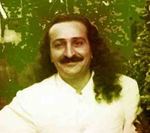 Those who try to understand God through the intellect alone, arrive at some cold and dry concept which misses the very essence of divine nature. It is true that God is infinite knowledge, existence, power and bliss, but true understanding comes from knowing His essence as infinite love.
In the ‘beyond state’ from which the entire universe springs and into which it ultimately merges, God is eternally infinite love. It is only when God’s love is viewed in the limited context of forms — which arise in the interim period of the appearance of the illusory universe of duality — that its infinity seems to have been impaired.
When God’s love experiences itself in and through the manifested forms of the universe, it goes through the following phases: (i) experiencing itself as extremely limited, (ii) experiencing itself as becoming less and less limited and becoming more and more like infinite love, and (iii) experiencing itself to be what it really is: infinite in essence and existence.
The experience of limitation in love arises due to ignorance caused by the sanskaras which are by-products of the evolution of consciousness; and the process of love becoming infinite is characterised by the shedding of these limiting sanskaras. After going through the almost unconscious stages of the mineral kingdom, love becomes conscious of itself as lust in animals. Its first appearance in human consciousness is also in the form of lust. desired for the sake of and from the viewpoint of the limited and separate self. At the same time, it is a form of love, because it has in it some kind of appreciation for others, though this appreciation is completely vitiated by thick ignorance about the true Self. Read the rest of this entry
GOD IS WITHIN YOU
It is impossible to find God outside of ourselves. Our own souls contribute all of the divinity that is outside of us. We are the greatest temple. The objectification is only a faint imitation of what we see within ourselves.
15 Laws: What You Need to Keep in Mind – Swami Vivekananda
3. Life is Beautiful: First, believe in this world – that there is meaning behind everything. Everything in the world is good, is holy and beautiful. If you see something evil, think that you do not understand it in the right light. Throw the burden on yourselves!
4. It’s The Way You Feel: Feel like Christ and you will be a Christ; feel like Buddha and you will be a Buddha. It is feeling that is the life, the strength, the vitality, without which no amount of intellectual activity can reach God.
5. Set Yourself Free: The moment I have realised God sitting in the temple of every human body, the moment I stand in reverence before every human being and see God in him – that moment I am free from bondage, everything that binds vanishes, and I am free.


 MSR Ayyangar's Blog